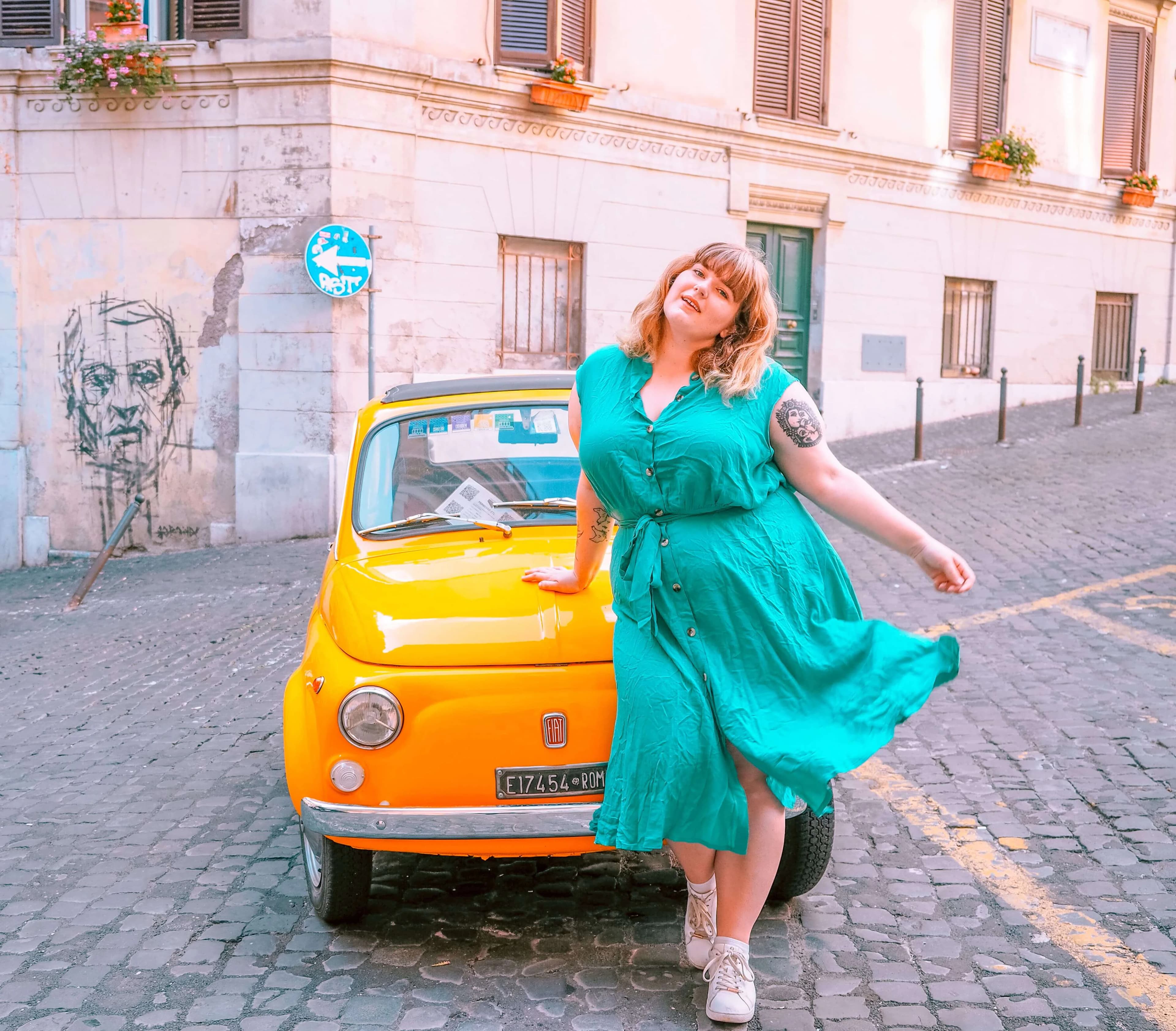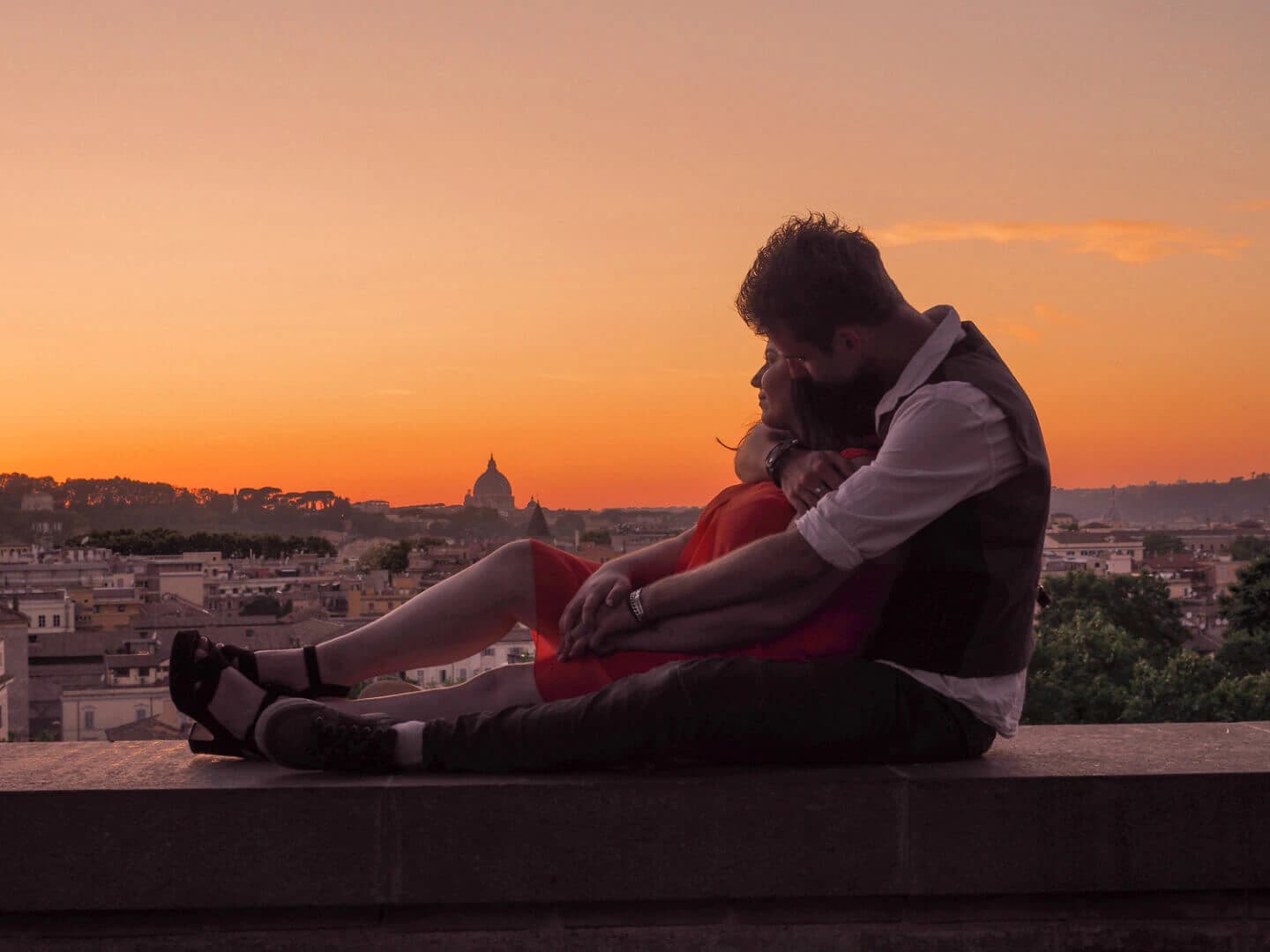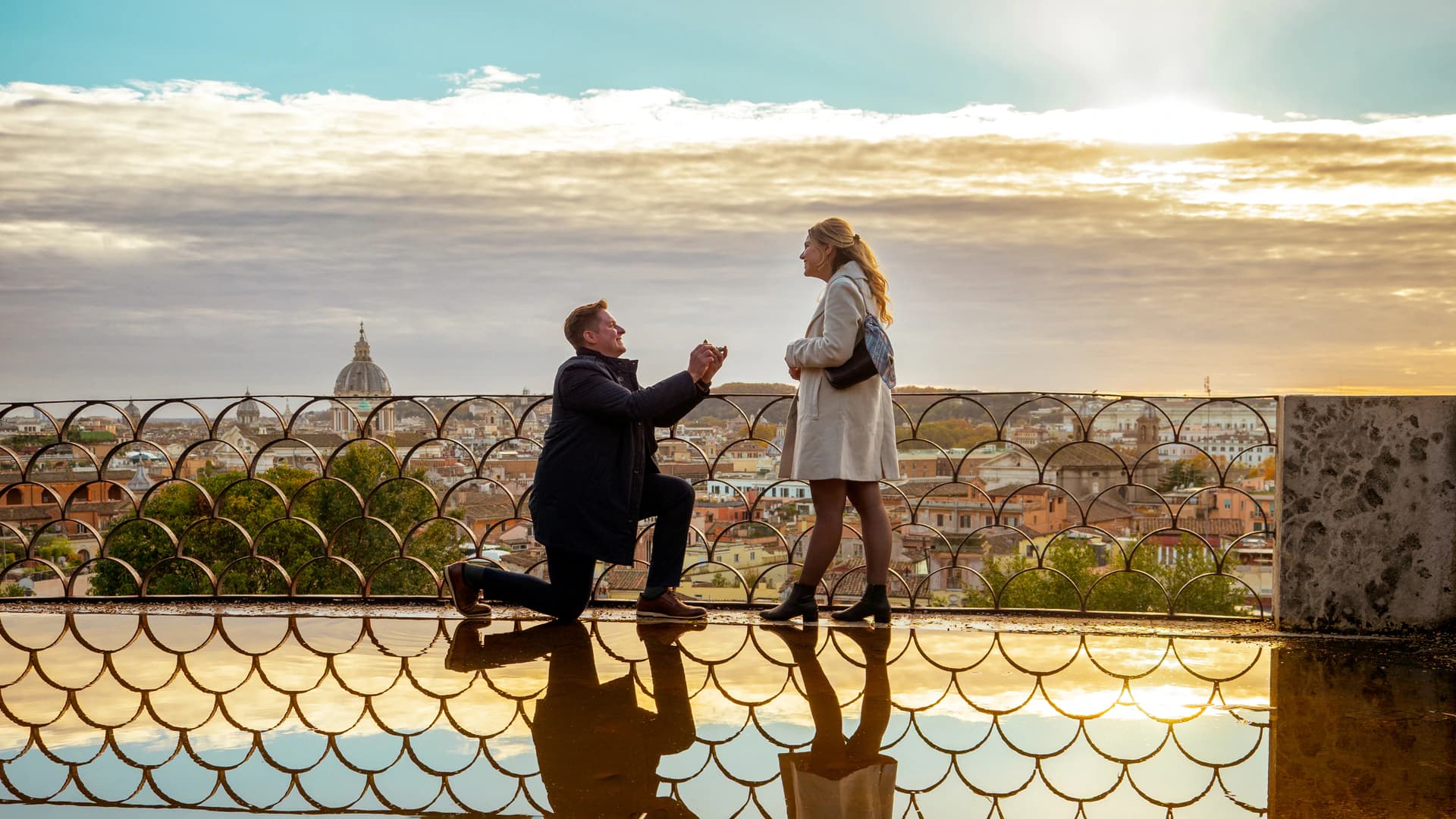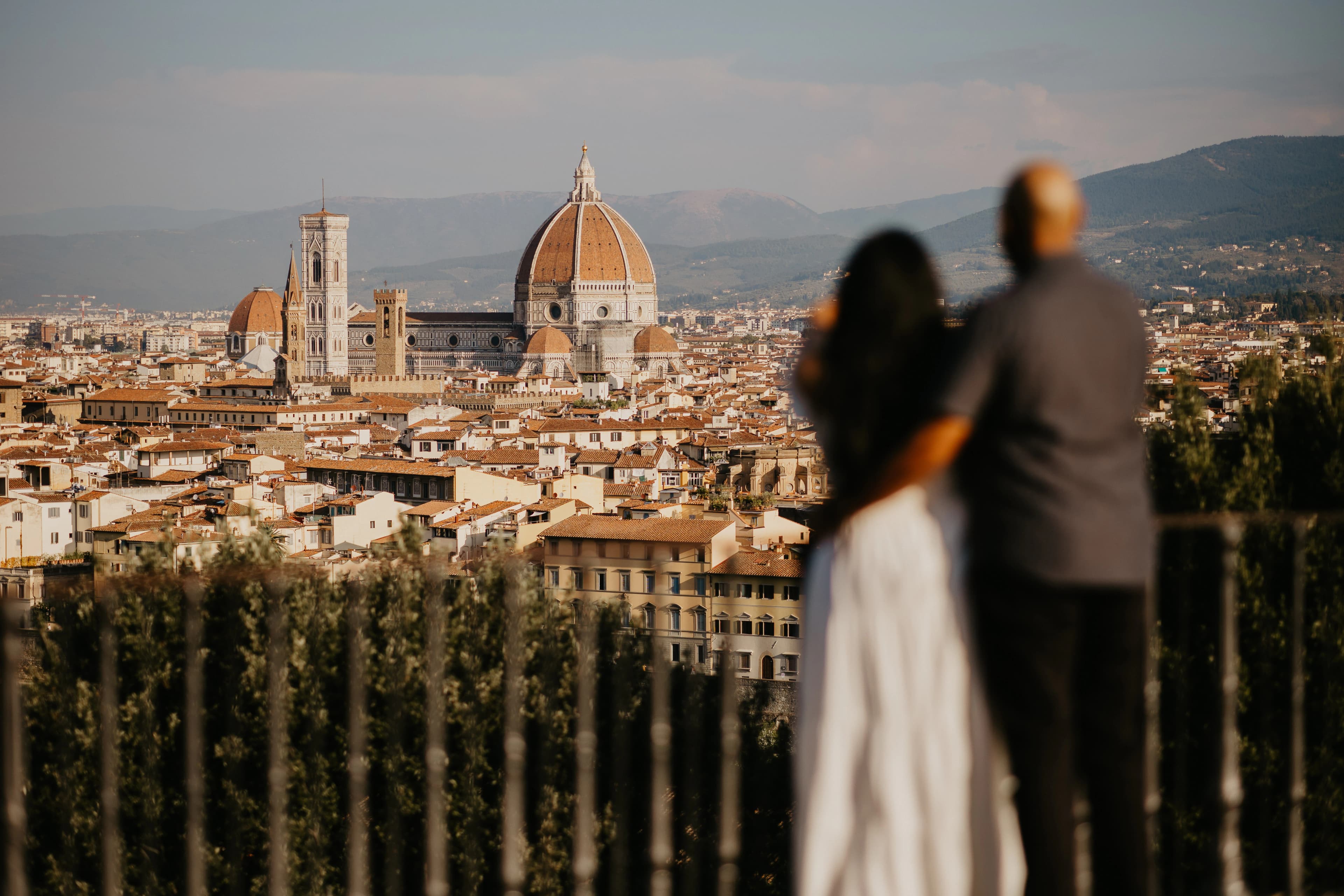
The best time for a photoshoot in Italy depends on the atmosphere you want, the places on your route and how comfortable you are with early starts. There is no single perfect month: a quiet winter morning in Rome can be as beautiful as a summer sunset in Positano. Light and crowd levels usually make a bigger difference than the date alone.
As a general rule, sunrise offers empty streets, cooler temperatures and clean views of famous landmarks. The hour before sunset creates warmer skin tones, longer shadows and a cinematic glow. Midday can work in shaded streets or covered arcades, but strong overhead sun is less flattering and historic centres are at their busiest.
Sunrise or sunset: which is better?
Choose sunrise when landmarks are the priority. Trevi Fountain, the Spanish Steps, Rialto Bridge and St. Mark’s Square are dramatically quieter before breakfast. The light is gentle, the air is cooler and your photographer can compose wider images without waiting for crowds to pass.
Choose sunset when you prefer warmth, movement and a more relaxed start to the day. Sunset is especially effective along the Arno in Florence, beside the Venetian lagoon and on the Amalfi Coast. Popular viewpoints remain busy, so the route often mixes one iconic view with quieter nearby streets.
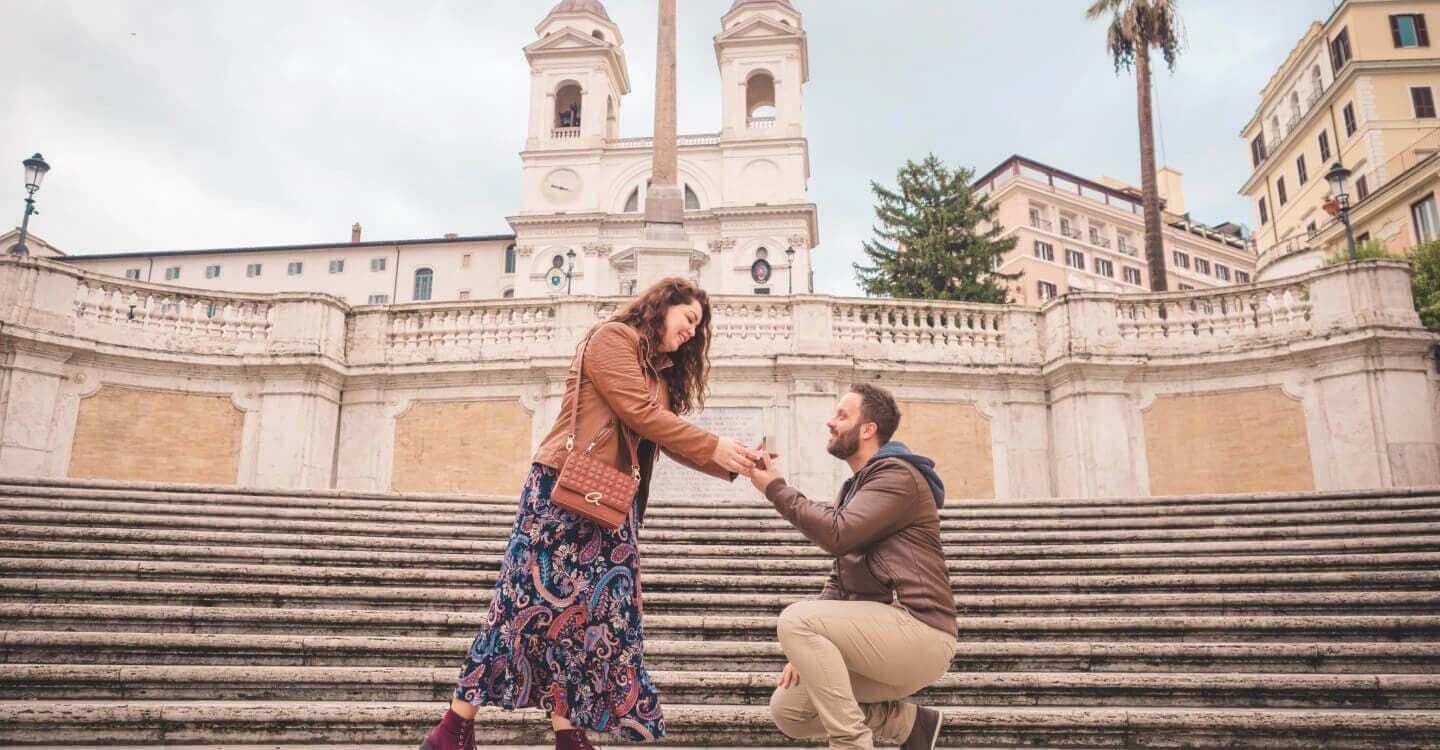
The best season for photos in Italy
April to June and September to October offer the most balanced conditions: mild temperatures, long enough days and softer light. Spring brings fresh greenery and flowers, while early autumn has warm stone, calmer evenings and rich colour. These periods are popular, so booking your photographer in advance is sensible.
July and August can still produce beautiful photographs, but timing matters. Sunrise avoids heat and dense crowds in Rome, Florence and Venice. On the coast, a late session can work well if the route allows for traffic, stairs and the time needed to reach the viewpoint before sunset.
From November to March, cities are quieter and the lower sun can create elegant, directional light throughout more of the day. Bring layers and keep some flexibility for rain. Winter is particularly appealing for couples who want an intimate, atmospheric gallery rather than a bright summer look.
Best photoshoot time in Rome and Florence
In Rome, begin early for Trevi Fountain, the Spanish Steps or the Colosseum. A morning route can move from an iconic landmark into cobbled streets before the city becomes busy. Sunset works beautifully at wider viewpoints, around Castel Sant’Angelo and beside the Tiber.
Florence is compact and easy to photograph on foot. Sunrise suits the Duomo, Piazza della Signoria and Ponte Vecchio; sunset is ideal for river views and Piazzale Michelangelo. A 60- or 90-minute session gives enough variety without turning the experience into a race between landmarks.
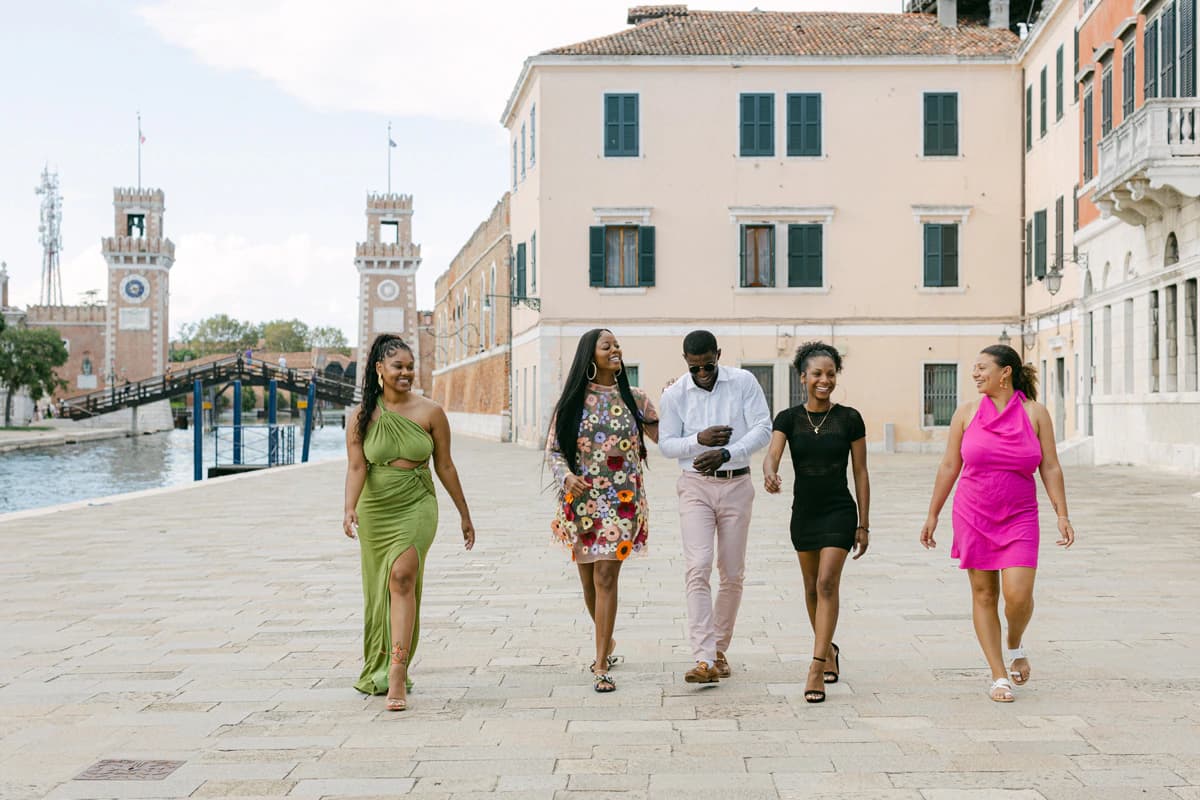
Best photoshoot time in Venice and the Amalfi Coast
Venice rewards an early start more than almost any other destination. Before the day-trippers arrive, its bridges, canals and squares feel calm and cinematic. Evening light by the lagoon is beautiful too, but a local photographer will usually guide you through quieter backstreets before finishing near the water.
Positano, Amalfi and Ravello require slower planning. Transfers, stairs and seasonal traffic affect how much can be covered. Rather than combining several towns, choose one base and allow the photographer to build a route around its best light. Sunset over the sea is memorable, while morning can offer cleaner views and cooler walking conditions.
How long should an Italy photoshoot be?
Thirty minutes works for a focused portrait session in one compact area. Sixty minutes provides a comfortable mix of portraits and candid movement. Ninety minutes is better for outfit variation, proposals or a route with several nearby stops. Longer sessions make sense when transfers, multiple neighbourhoods or a more complete travel story are involved.
When you book, share your travel dates, preferred mood and must-have landmark. Your photographer can recommend a start time that balances light, crowds and realistic walking time for that specific city.