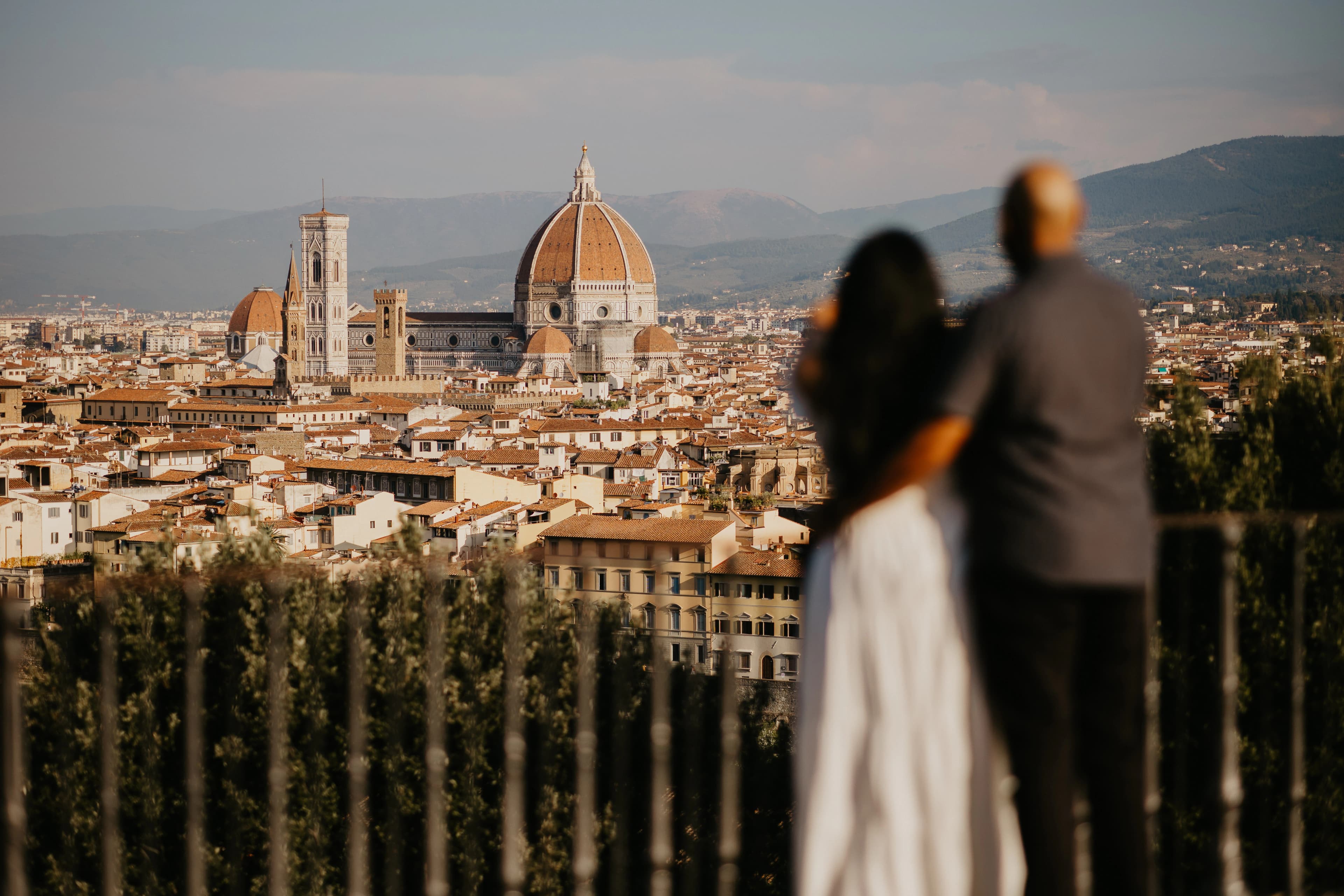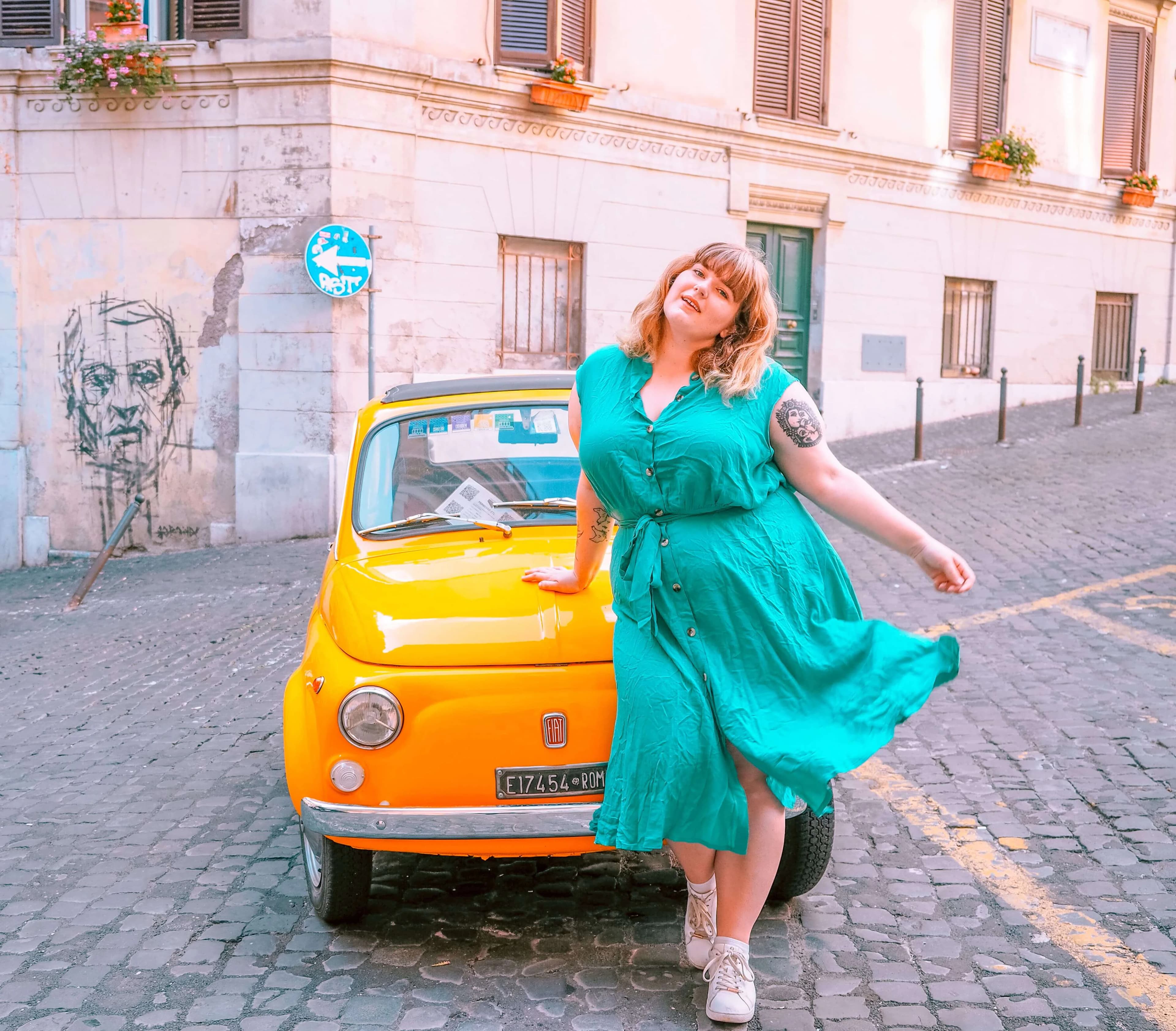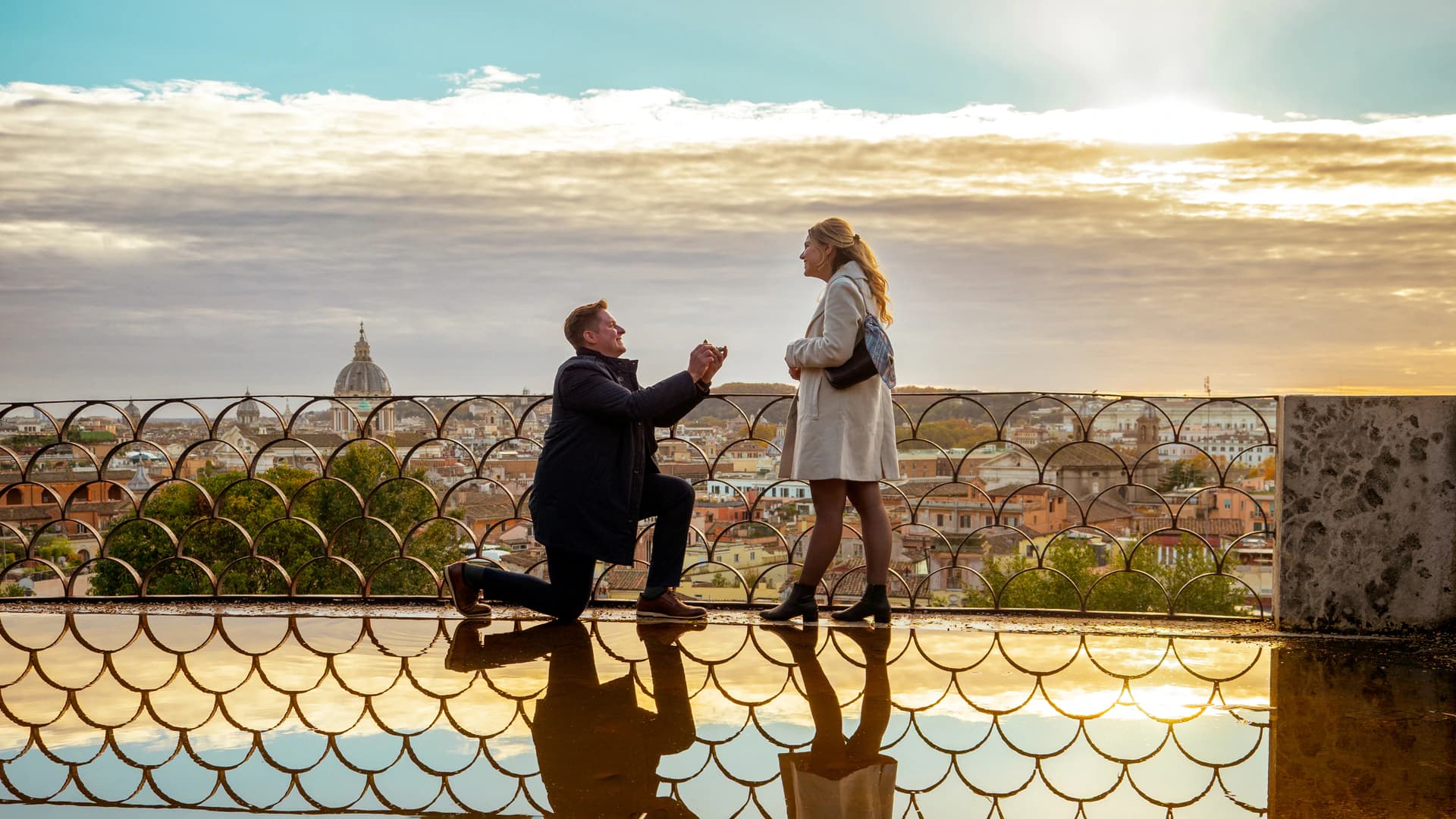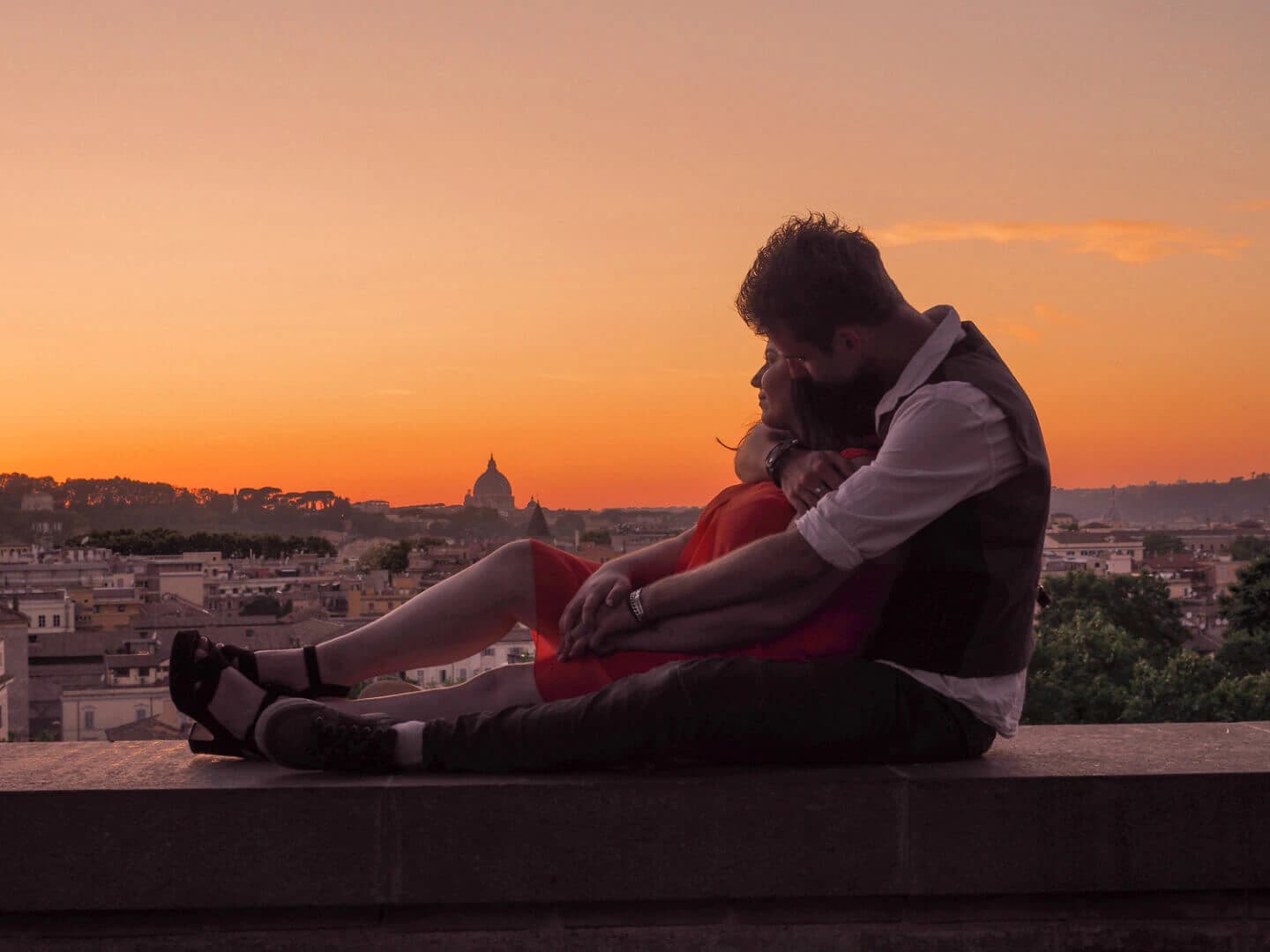
Golden hour in Rome is the period shortly after sunrise or before sunset when the sun sits low and the city’s stone turns warm and luminous. Travertine, ochre façades and the Tiber reflect softer light, while long shadows give photographs depth without the harsh contrast of midday.
The exact duration changes with the season and surrounding buildings. In narrow streets, direct light can disappear earlier than the official sunset; at open viewpoints it lasts longer. A local photographer plans the route around where the light will actually fall, not only the time shown by a weather app.
Morning golden hour versus evening golden hour
Morning golden hour is calmer and cooler. It is the strongest choice for Trevi Fountain, the Spanish Steps and central landmarks where crowds build quickly. The light becomes brighter as the session continues, so the route can begin with the most iconic stop and finish in shaded streets.
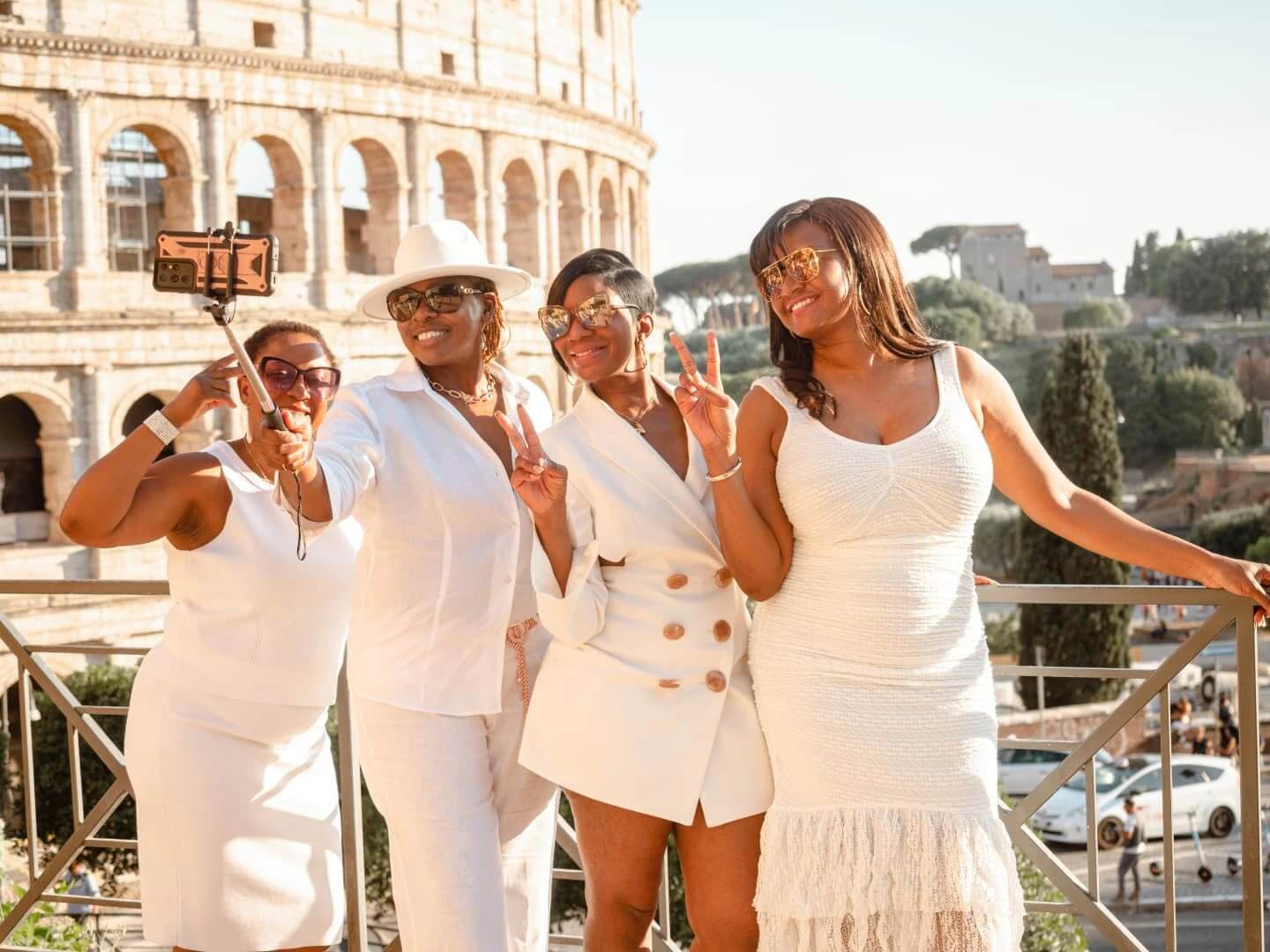
Evening golden hour feels warmer and more social. It suits the Tiber, Castel Sant’Angelo, the Colosseum viewpoints and panoramic terraces. The city is busier, but the atmosphere can feel lively and romantic rather than empty.
Best Rome locations for golden-hour photos
Castel Sant’Angelo and the nearby bridges offer open sky, river reflections and several directions to work with changing light. Around the Colosseum, elevated viewpoints create space between the subject and the monument. The Roman Forum is particularly atmospheric when low light catches columns and ruins.
Pincian Hill and the Orange Garden are appealing for wider views, while Monti gives a more intimate story of warm streets, ivy and neighbourhood life. The best route often combines one recognised landmark with a quieter area nearby.
Golden-hour timing by season
In summer, sunset is late and the strongest light arrives after a full day of heat. Plan dinner afterwards and allow extra time for traffic. Spring and autumn offer comfortable temperatures and a convenient balance between daylight and evening plans.
Winter golden hour arrives early but can last beautifully across open areas because the sun remains low. Rome is also quieter, making it easier to photograph central locations without beginning at dawn.
What to wear for warm Rome light
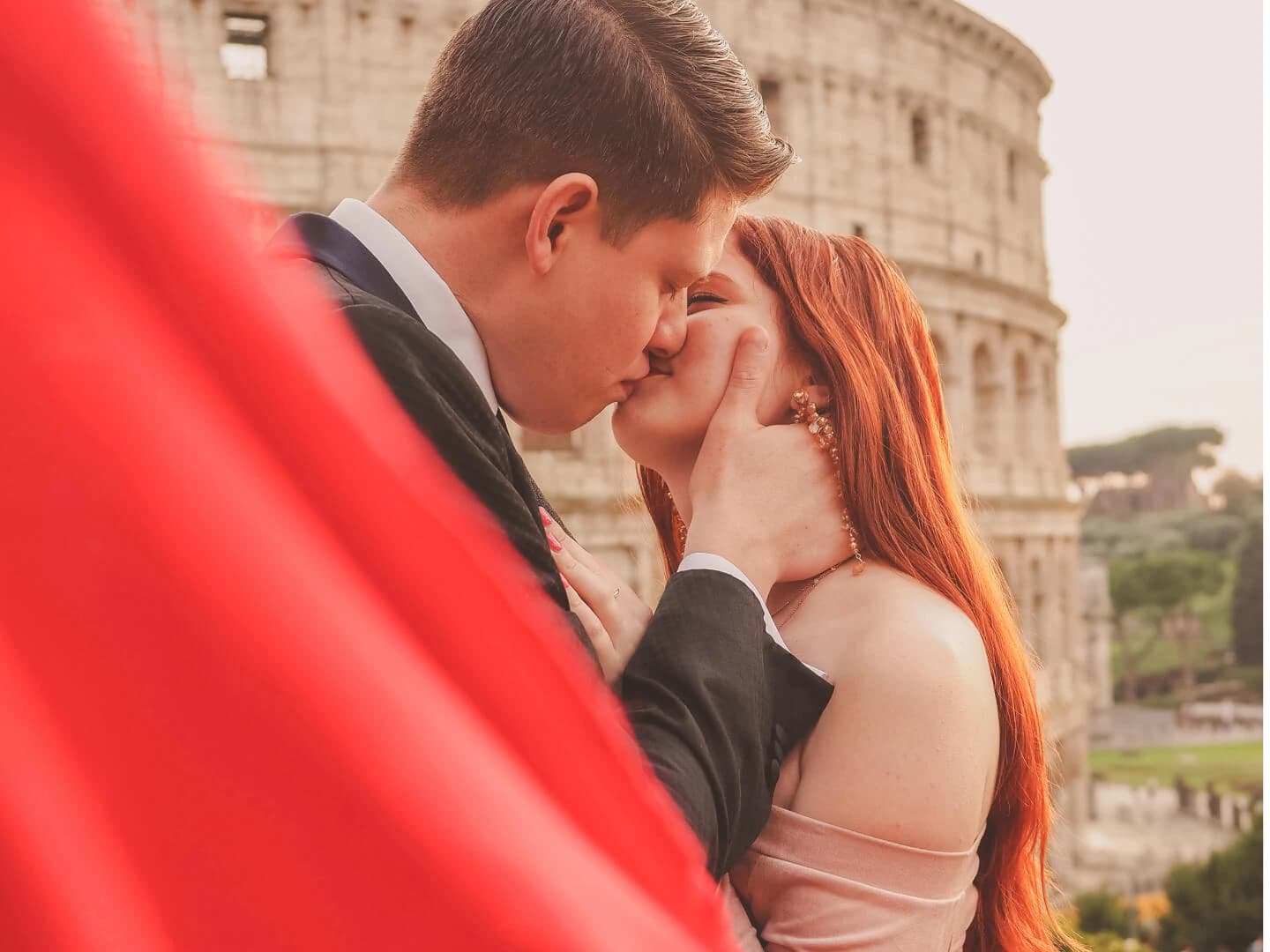
Cream, white, navy, muted blue, olive and rich earth tones complement Rome’s palette. Flowing fabrics catch movement, while jackets and structured pieces create clean silhouettes. Avoid colours too close to your skin tone if you want stronger separation from the warm background.
Comfortable footwear still matters. A golden-hour route may move quickly between nearby viewpoints as the light changes, and cobbles can make formal shoes difficult outside the main portrait stops.
How to build a relaxed golden-hour route
Choose one priority location and let the photographer build outward from it. Sixty minutes is enough for a compact route; ninety minutes provides more variety and protects against short delays. Trying to cross the city during the best light usually produces less, not more.
Arrive a little early, keep the schedule flexible and share whether you prefer candid, romantic or editorial images. Golden hour is not a filter applied afterwards: it is a brief collaboration between timing, location and the way you move through the city.